I came across the writing of Talia Marshall very recently. Her rebutting of Paul Moon and Scott Hamilton’s takes on Ans Westra to be exact. The piece is sharp, humorous, withering and persuasive. I summarise but in essence it starts with ‘the dog had a stroke and now I am here dealing with you boof heads’ By the end my vague lazy view of the work of Ans Westra was transformed.
Then I read her treatise on death: Sinéad O’Connor’s, her father’s, her friend Angus’, Towns Van Zandt’s and her uncle’s. At the time I shared it on twitter saying it was magnificent and devastating writing and I’m not going to sum it up better now.
So I was pretty keen to read her first book Whaea Blue and decide to use my new found resource of time to head into town and take in an author discussion as part of the Institute of Modern Letters Writers on Mondays program. The talk was at Rongomaraeroa, the marae in Te Papa.
Last time I was here it was for a PechaKucha presentation. Like a TED Talk but based around a number of slides. Tūhoe artist and poet Ati Teepa invited me. I fucked it up totally. I wasn’t in time with the slides, I realised half way through what my presentation should really have been about and the other presenters were amazing and pros and I was not. The presentations are recorded and sit on the internet and mine is out there and I have never felt the need to pick the scab and watch it and neither should you. What the presentation should have been about was Waiorua Bay.
I’m sitting there musing on all this as the room fills in. The crowd is split between grey haired boomers and impossibly young looking fresh faced IML students. I have a propensity to think of myself as the outcast so representing the middle aged in a room of old and young then gets me thinking about how I’m the only one there wearing dirty work boots even if they are sprayed with bougie brewing yeast rather than mud or concrete. Midway through the talk, a message beeps on my phone alerting me to the fact that I haven’t put it on silent. I reach into my pocket and push the down volume button to silence the alerts. My phone vibrates violently before emitting a frighteningly loud alarm. It seems I have discovered its anti-rape siren function. Everything holts and all eyes are on me. If before I stuck out only in my own imagination, I have successfully made my spectacle flesh. I now muse on if I am cursed here which is appropriate, given we are here for Whaea Blue.
After my alarm is quelled, the discussion continues. At the end Victor Rodger who is hosting Talia tells everyone to go to Unity Books and buy Whaea Blue, “even though they falsely accused my cousin Tusiata Avia of shoplifting twice”. It’s a mic drop moment and one I lace with dead emojis when recounting it electronically later.
I buy the book from Unity Books. I smile to myself as I select a “signed by the author” copy knowing I would never subject myself or the author to the odd ritual of getting it signed in person. Unsurprisingly no one asks to check my bag as I leave, yeast splattered work boots or not.
I start to read immediately. I read at the Malthouse with a beer, at Fisherman’s Plate with a Pho. I read it on the train back up the coast. A couple of days later and I tweet Talia how I love it when I am consumed by a book. However, what I really mean is I love it when I consume a book. Immediately after I reach a part of the book where Talia writes that the tales of the musket wars shouldn’t be offered up to be consumed by Pākehā. A chapter on and I would have worded that tweet differently.
Whaea Blue is fierce, tender, funny, tragic, poignant and cutting. Time and dimension are fluid. We visit 1980’s Wellington where I was a child roughly the same age as Talia a suburb or so over. We live inside the radical lesbian community, we visit the Mormon Temple, we visit a German built eco house “as if having a composting toilet in beautiful parts of Aotearoa could undo the holocaust” where a new age hippie does the inevitable fash lite flex, we journey up the whakapapa, we see the relationships with men, the good and the shit , we see the relationship with a father who came and then went too young. We drink, we smoke and eat Burger King and hangi. We visit the coffee cart at Pōrangahau which I think I already know from the TV show Shepherdess. We sit with Hone Tuwhare and Ans Westra in the crib and we face Te Rauparaha at Waiorua Bay. Waiorua Bay where I was the night my dad died. See making it about me.
The dead are woven through the book and the shifts in time mean they are active forces right through. It is an inherently Māori worldview.
The changes in time and space and chronology are many and masterfully done. Reviewing for Newsroom Louisa Kasza writes that she almost didn’t say anything but the editor has missed a lot of incorrect tense usage. To my eye the tenses are clearly deliberate, and Louisa just doesn’t get it. A bit whakama if you ask me. I wouldn’t have said anything.
One part which made me laugh out loud is where our troubled abusive old master of NZ poetry whose crimes keep coming to light is referred to simply as “the man who was married to JC Sturm”.
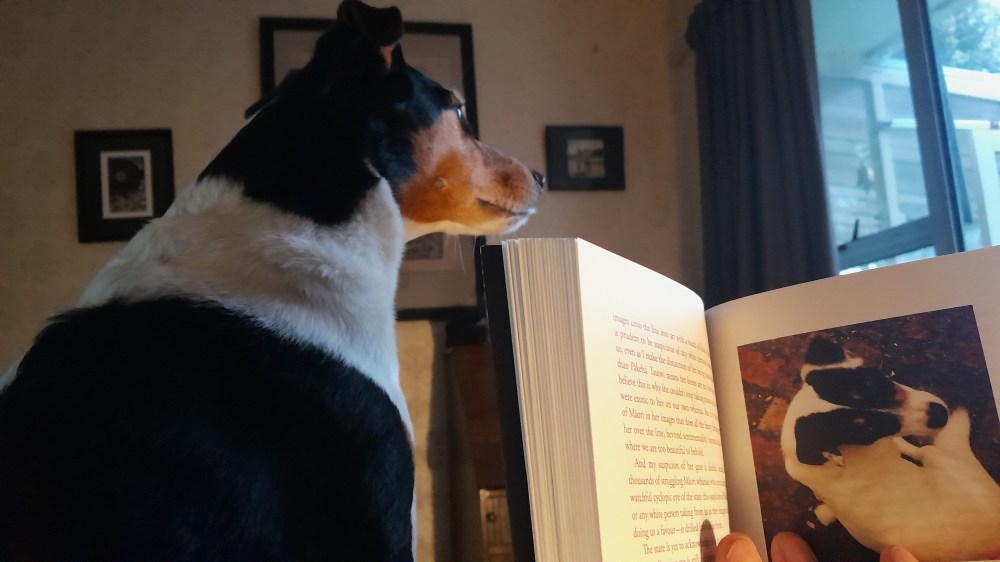
You know a book is good when you finish it and feel compelled to start it again which is exactly what I am doing. I hope the Kuri is ok.
 Raise the Dawn